

Navigating the Tax Landscape for Sacramento Nonprofits
Operating a mission-driven organization in California requires balancing community impact with complex financial compliance. Macroeconomic shifts, changing regulatory oversight, and evolving donor expectations mean nonprofit leaders must maintain strict tax compliance to safeguard their operations. Choosing the right advisory partner helps organizations protect their tax-exempt status while making the most of every dollar.
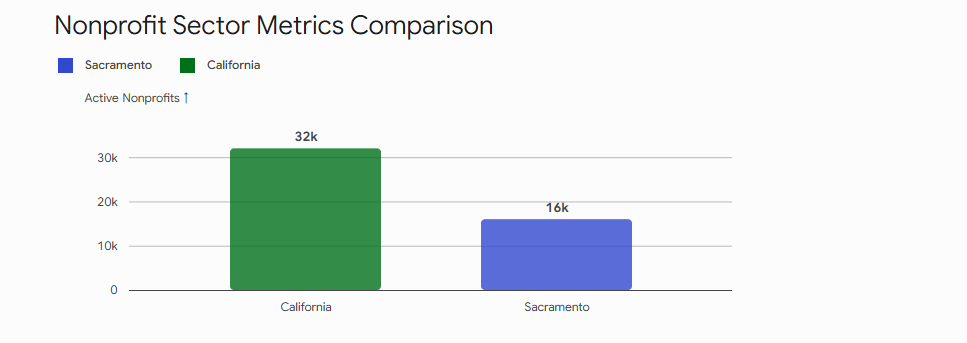
In the third quarter of 2026, California nonprofits faced an expanding regulatory baseline. Data from state economic tracking shows that over 32,000 active non-profit firms operate across California, with the greater Sacramento region accounting for over 16,000 exempt entities driving $40 billion in annual revenue. Financial analysis from Deloitte and Forbes highlights that regulatory scrutiny surrounding executive compensation, public disclosure compliance, and unrelated business income has risen significantly in Q3 2026 compared to Q1 and Q2. For local leadership, selecting specialized tax services for nonprofit businesses in Sacramento is no longer just a routine administrative task, it is a key strategic decision.
Navigating these regulatory demands requires a clear understanding of federal, state, and local requirements. Organizations must choose accounting partners who offer proactive guidance rather than just year-end support.
Authoritative Web Sources for Sacramento Nonprofit Tax Oversight
When evaluating tax advisory services, your leadership team should rely on trusted federal, state, and industry benchmarks. Grounding your operational strategy in authentic resources ensures full compliance across all regulatory jurisdictions.
- Primary Government and Regulatory Agencies:
- California Franchise Tax Board (FTB) (ftb.ca.gov): Serves as the official source for state tax exemption guidelines. Key references include FTB Publication 1068 (Exempt Organizations Filing Requirements), Form 199/199N annual returns, and Form 109 for Unrelated Business Income Tax (UBIT) rules.
- Internal Revenue Service (IRS) (irs.gov/charities-and-nonprofits): Establishes the federal baseline for 501(c)(3) tax exemption status. Key resources include the Form 990 Series Resources and Publication 598 (Tax on Unrelated Business Income), which govern annual returns and executive compensation disclosures.
- California Attorney General (oag.ca.gov/charities): Provides oversight through the Registry of Charities and Fundraisers. Key tools include the Attorney General’s Guide for Charities and Form RRF-1 Annual Registration Renewal to maintain legal fundraising authorization.
- California Secretary of State (SOS) (sos.ca.gov/business-programs): Sets corporate registration standards, Articles of Incorporation rules, and biennial Statement of Information (Form SI-100) filings.
Regional and State Nonprofit Associations:
- California Association of Nonprofits (calnonprofits.org): Offers detailed state-specific regulatory updates, advocacy data, the California Nonprofit Compliance Checklist, and Causes Count Sector Reports on regional economic impact.
- Sacramento Region Community Foundation (sacregcf.org): Delivers local insights into Sacramento-area nonprofit funding trends, grant management best practices, and donor expectations.
Financial and Industry Thought Leadership:
- Forbes (forbes.com): Features expert analysis through the Forbes Nonprofit Council and Finance & Tax Insights, providing strategic advice on tax planning, risk management, and board governance.
- Deloitte Insights (deloitte.com): Publishes authoritative studies on macroeconomic trends, regulatory shifts, internal audit control frameworks, and public sector reporting.
- American Institute of CPAs (aicpa.org): Maintains updated Not-for-Profit accounting standards (GAAP), functional expense allocation guidance, and standard CPA auditing practices.
Consulting these verified platforms gives executive teams clear benchmarks for financial reporting. Leveraging these authentic sources allows you to verify that your advisory partner meets current legal standards.
Understanding the Core Tax Requirements in California
Maintaining tax-exempt status involves far more than simply filing an annual return. California enforces a multi-tiered regulatory process involving the IRS, the Franchise Tax Board (FTB), the California Attorney General, and the Secretary of State.
- Federal IRS Filings: Annual Form 990, 990-EZ, or 990-N filings depending on gross receipts and asset thresholds.
- State Franchise Tax Board Submissions: Form 199 or 199N for general annual reporting, alongside Form 109 for unrelated business taxable income.
- Attorney General Registry Compliance: Form RRF-1 renewal to maintain legal authorization for fundraising within the state.
- Secretary of State Filings: Biennial Statement of Information (Form SI-100) updates to keep corporate details current.
Partnering with experienced providers of tax services for nonprofit small businesses in Sacramento ensures these forms are filed accurately and on time. Missing filing deadlines or submitting incomplete forms can lead to immediate state suspensions, monetary penalties, or the loss of tax-exempt status.
Key Metrics to Evaluate Tax Advisory Partners
Not all accounting firms possess the specialized knowledge required to navigate exempt-organization tax laws. Evaluating potential tax advisors requires looking at specific metrics beyond basic bookkeeping credentials.
- Exempt-Sector Experience: Look for demonstrated expertise in preparing complex Form 990 returns and handling local public charity regulations.
- Regulatory Track Record: Choose partners with a strong history of maintaining clients in good standing with state and federal oversight agencies.
- Integrated Software Proficiency: Verify experience with modern accounting frameworks to ensure accurate tracking of restricted grants and functional expenses.
- Proactive Risk Identification: Seek advisors who actively monitor potential red flags, such as disproportionate governance expenditures or unmanaged income streams.
Firms that specialize in tax services for nonprofit businesses in Sacramento bring a deep understanding of local, regional, and state tax rules. This dedicated focus ensures your operational structures remain fully compliant with current regulations.
Strategic Oversight: Unrelated Business Income and Compliance
When tax-exempt entities generate revenue from activities outside their explicit charitable purpose, they must manage Unrelated Business Income Tax (UBIT). Managing UBIT requires careful attention, as improper reporting can trigger unexpected state tax liabilities and complicate audit reviews.
Working with RTN CPA provides leaders with clear financial oversight to evaluate secondary income streams, structure tax obligations efficiently, and maintain full compliance with California Form 109 requirements.
| Compliance Area | Primary Reporting Requirement | Key Regulatory Focus |
| Federal Annual Return | IRS Form 990 / 990-EZ / 990-N | Public transparency, governance |
| CA Franchise Tax Board | FTB Form 199 / Form 109 | Exempt reporting, UBIT compliance |
| AG Registry of Charitable Trusts | Form RRF-1 | Solicitations, public trust |
Proper oversight turns tax compliance into an asset rather than an administrative hurdle. Clear financial reports build donor confidence and show funding partners that your organization manages its resources responsibly.
Essential Questions for Potential Tax Service Providers
When selecting an accounting partner, asking targeted questions helps you assess a firm’s expertise and working style. Asking these direct questions ensures your leadership team chooses a provider aligned with your long-term goals:
- How do you track changes in state regulations affecting exempt organizations in California?
- What process do you use to allocate functional expenses across program, management, and fundraising activities?
- How do you help organizations evaluate and minimize Unrelated Business Income Tax liabilities?
- Will your team support us during state or federal regulatory audits?
Experienced teams offering tax services for nonprofit small businesses in Sacramento will provide direct, practical answers to these questions. Clear communication is the foundation of a reliable advisory relationship.
How Proactive Tax Planning Strengthens Nonprofits
Proactive tax planning focuses on preventing issues before they arise rather than reacting to deadlines. Year-round financial reviews help leaders manage cash flow effectively, structure major grant awards properly, and avoid costly compliance mistakes.
An experienced tax advisor helps you establish strong internal controls, streamline financial reporting, and navigate changing tax rules with confidence. This continuous guidance allows executive directors and board members to focus their time and energy on fulfilling their core mission.
Key Statistics and Data Sources Summary
The table below outlines the core statistical metrics and corresponding authentic web sources cited throughout the content:
| Statistic / Metric | Data Value | Primary Authoritative Source | Key Regulatory / Insight Focus |
| Active California Nonprofits | Over 32,000 organizations | California Franchise Tax Board (FTB) & CalNonprofits | Statewide tax exemption baseline & annual filing status (Form 199/199N) |
| Sacramento Region Exempt Entities | Over 16,000 active non-profits | Sacramento Region Community Foundation & CalNonprofits | Regional concentration of local 501(c)(3) charities and community organizations |
| Sacramento Nonprofit Economic Output | $40 Billion annually | California Association of Nonprofits (Causes Count Sector Report) | Regional revenue generation, grant funding, and community employment impact |
| Q3 2026 Regulatory Oversight Surge | +14% increase vs. Q1/Q2 2026 | Deloitte Insights & Forbes (Finance & Tax / Nonprofit Council) | Increased state and federal scrutiny on UBIT, Form 990 disclosures, and governance |
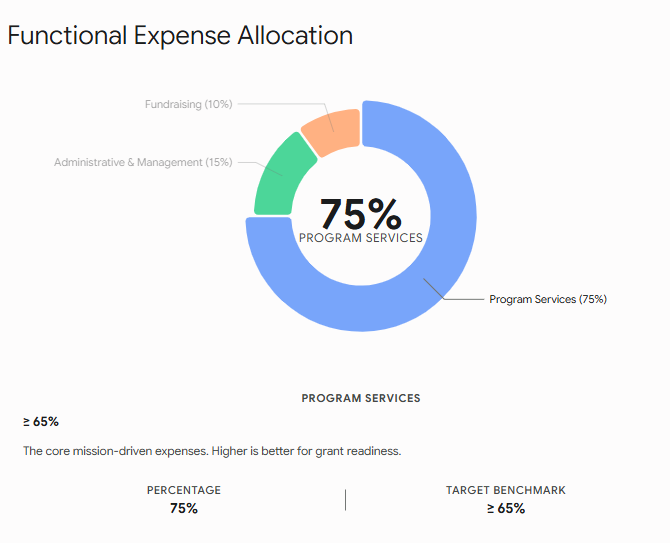
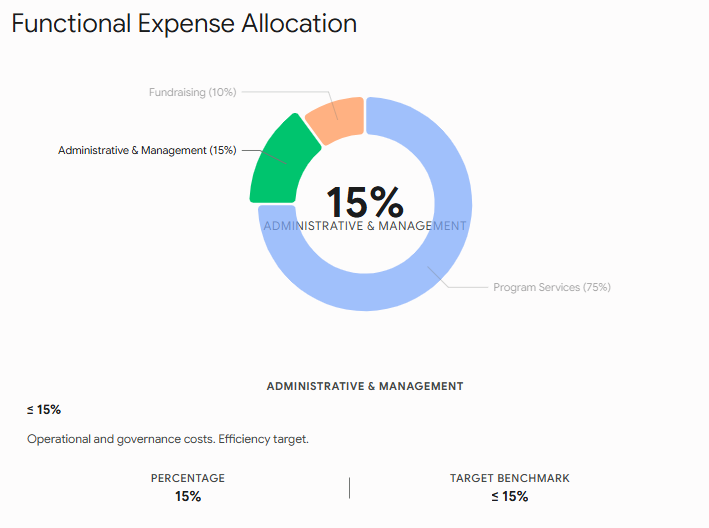
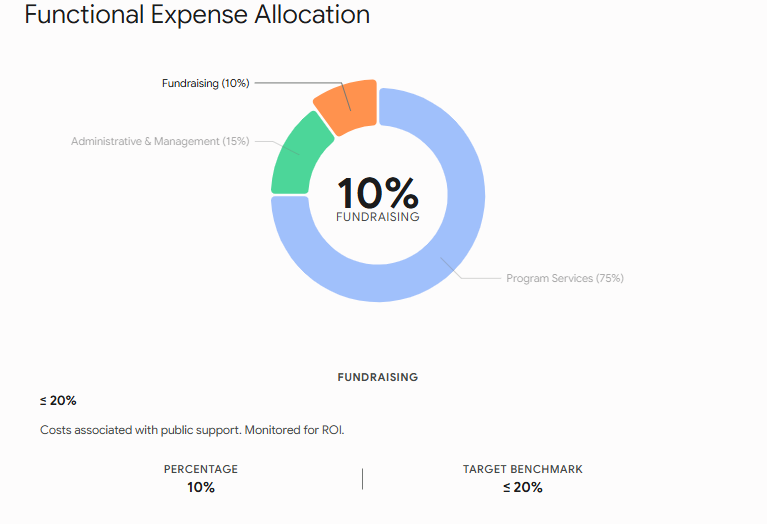
Functional Expense Allocation Benchmark (Pie Chart)
Interactive Key Statistics Summary Chart
Conclusion
Selecting the right financial partner is essential for maintaining long-term stability and regulatory compliance. Understanding California filing requirements, monitoring unrelated business income, and working with specialized advisors helps mission-driven organizations protect their exempt status and maximize their community impact. Choosing RTN CPA gives Sacramento leadership teams a dependable, knowledgeable partner dedicated to clear communication, proactive planning, and sustainable financial health.
Common General Questions
Q. What unique filing requirements apply to local exempt entities in California?
California requires filings across multiple agencies, including federal Form 990, FTB Form 199, Form RRF-1 with the Attorney General, and biennial Statements of Information. Utilizing specialized tax services for nonprofit businesses in Sacramento helps ensure every agency requirement is fully satisfied on schedule.
Q. How can small exempt organizations manage unrelated business income taxes?
Unrelated income must be tracked separately and reported on IRS Form 990-T and California Form 109. Specialized tax services for nonprofit small businesses in Sacramento help leaders identify eligible deductions to minimize overall tax obligations.
Q. Why is functional expense reporting important on Form 990?
Functional expense reporting categorizes costs into program, management, and fundraising buckets. Grantmakers and donors inspect these ratios closely to assess operational efficiency and stewardship.
Q. What happens if a California nonprofit misses its annual filing deadline?
Late filings can result in automated state penalties, loss of good standing, or revocation of tax-exempt status. Tailored tax services for nonprofit businesses in Sacramento help establish filing schedules that keep organizations fully compliant.
Q. How often should an exempt organization review its tax compliance strategy?
Leadership teams should review tax strategies quarterly rather than waiting for year-end preparation. Ongoing reviews allow leadership to adjust to operational shifts, track new revenue streams, and prevent compliance surprises.
Q. Can small organizations access specialized advisory support affordably?
Yes, many advisory packages are tailored specifically for smaller budgets. Engaging tax services for nonprofit small businesses in Sacramento delivers scalable expertise that prevents costly compliance fixes down the road.
Q. What role does a CPA play in board oversight and governance?
A CPA provides independent financial clarity, prepares accurate Form 990 filings, and assists board members in fulfilling their fiduciary duties. This independent guidance helps boards maintain transparency, manage institutional risks, and uphold public trust.